
NHS Forth Valley staff are helping to make healthcare more sustainable through a range of innovative projects that are reducing waste, cutting carbon emissions and improving efficiency across local services.
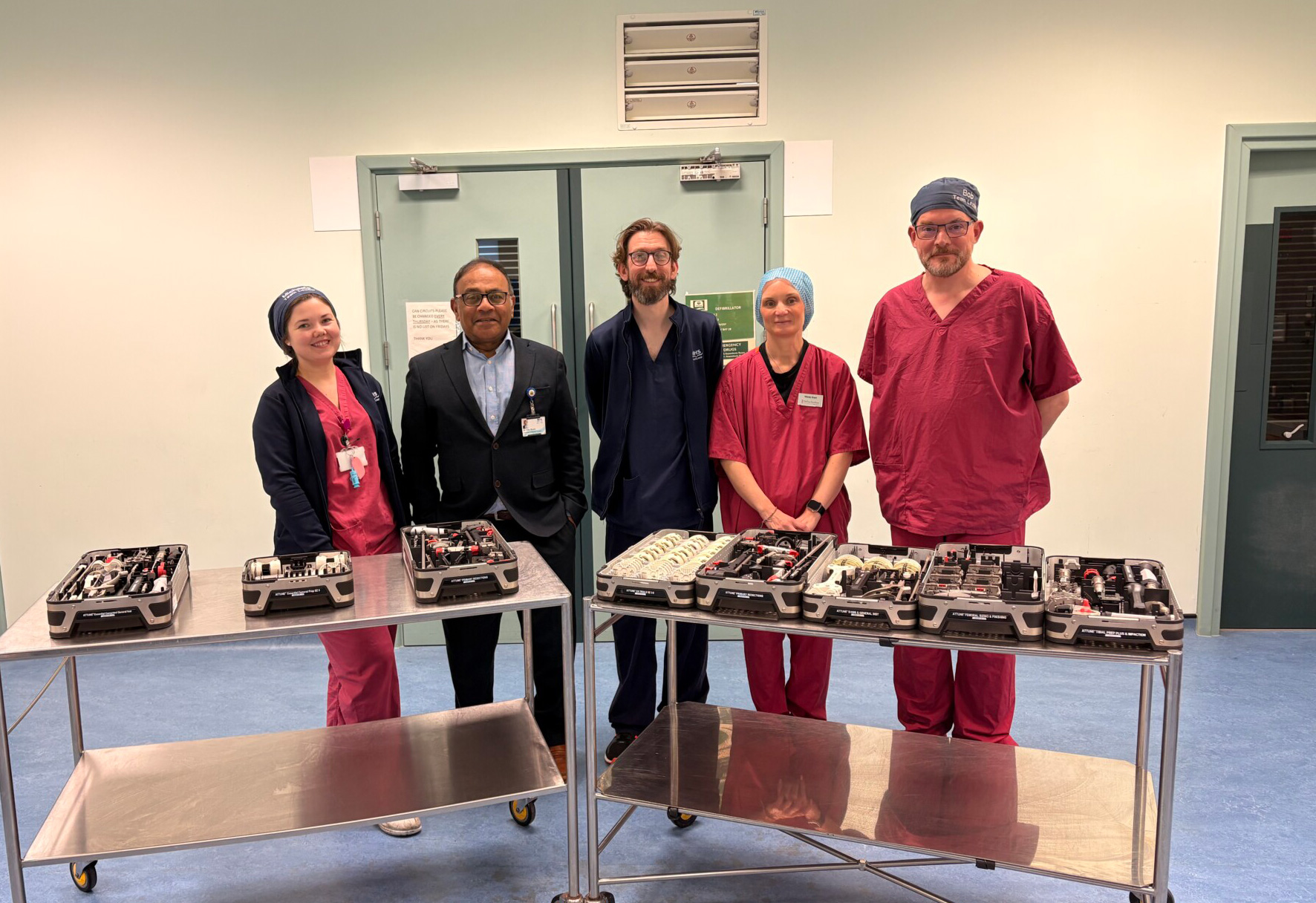
One of the latest initiatives is the introduction of Lean Surgical Trays at Forth Valley Royal Hospital. Led by the Orthopaedic team as part of the national Green Healthcare Scotland programme, the project focuses on reviewing surgical instrument sets and removing items that are not routinely used. This helps reduce waste, streamline processes and ease pressure on decontamination services, while maintaining high standards of patient care and safety.
The Scottish Government-funded programme supports NHS organisations across the country to reduce their environmental impact and make better use of resources. Previous work through the National Green Theatres Programme has already shown that hospitals can safely reduce waste and energy use while continuing to deliver excellent care.
At NHS Forth Valley, the results have been impressive. For some orthopaedic procedures, the number of surgical trays used has been reduced from five to two and a half, delivering projected savings of £21,000 and reducing carbon emissions by 1.3 tonnes of CO₂.
Mr Peter Moses, Consultant Orthopaedic Surgeon and Clinical Lead for Sustainable Care, said: “Through the National Green Theatres Programme, the Lean Surgical Trays initiative has delivered significant environmental and financial benefits. This work has been recognised as an example of best practice that other NHS Boards can follow.
“We have also reduced shoulder replacement trays from three to one and cut the number of instruments required from 105 to 69. We are now looking at further improvements in general surgery, ENT and trauma services as part of the wider roll-out of the programme.”
Sustainability improvements are also taking place within Endoscopy services. Over the past year, the team has been working to reduce single-use plastics, improve the management of clinical waste and lower energy consumption associated with endoscopic procedures.
Alongside these changes, the Green Endoscopy Programme is exploring how new technologies can help make procedures even more environmentally sustainable in the future.
The work taking place across NHS Forth Valley reflects a wider commitment across NHS Scotland to embed sustainability into everyday healthcare. By reducing unnecessary waste and making better use of resources, teams are helping to support the delivery of high-quality care while contributing to national climate goals.
David Taggart, Head of Climate Change Delivery for the Centre for Sustainable Delivery, said: “By treating environmental impact as a core element of quality and value-based care, we are supporting teams to deliver excellent patient outcomes while reducing waste, cutting carbon and making better use of public resources.”
As more departments become involved, these initiatives highlight how small changes in day-to-day practice can collectively make a significant difference for patients, staff and the environment.