
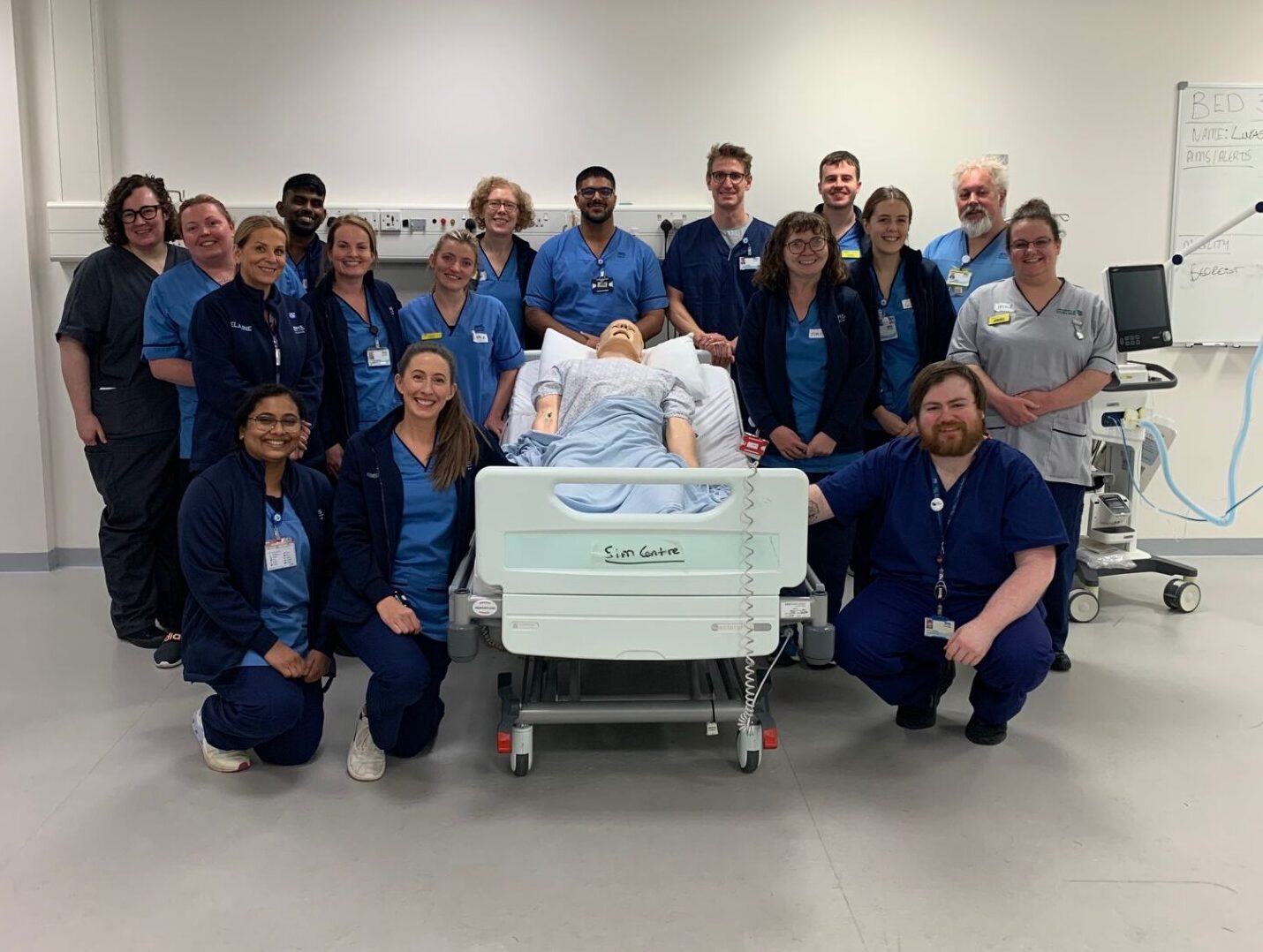
The Managing Intensive Care Emergencies (MICE) course was developed in 2019 by Senior Critical Care Practitioner Kimberley Kirkbright to support nursing staff in gaining experience and confidence in managing high-acuity, low-occurrence events through simulation-based education.
At the time, simulation training was often perceived as being primarily aimed at medical staff. MICE was designed to challenge this misconception, promoting greater nursing participation and ensuring that critical care nurses had access to high-quality, immersive training opportunities.
Over the past six years, the course has been delivered to Intensive Care Unit staff at Forth Valley Royal Hospital, hosted at the Scottish Centre for Simulation and Clinical Human Factors (SCSCHF). The programme includes a range of realistic clinical scenarios, followed by structured debrief sessions where participants can reflect on what went well and explore the challenges encountered. This supportive approach enables participants to build confidence, enhance decision-making skills and learn in a safe, controlled environment.
MICE is delivered by a multidisciplinary faculty, including Senior and Advanced Critical Care Practitioners and Consultant Anaesthetists, with invaluable support from the SCSCHF team to ensure the smooth delivery of each course.
Following the success of the local programme, Kimberley led the expansion of MICE to a national level, making it accessible to intensive care nursing staff across Scotland. The pilot national course took place earlier this year, welcoming participants from NHS Lanarkshire, NHS Greater Glasgow and Clyde, and NHS Ayrshire and Arran.
Feedback from attendees was overwhelmingly positive, highlighting the value of shared learning and the benefits of greater consistency in practice across NHS Boards, providing reassurance for both staff and patients.
Dr Neil Stewart, who played an important role in supporting the MICE programme, sadly passed away before the first national course took place. Colleagues are certain he would have been immensely proud of what has been achieved.
Looking ahead, the SCSCHF and ICU Simulation Faculty hope to run the course annually, allowing more ICU nursing staff to benefit from this innovative training approach. The national pilot marks a significant milestone, offering a valuable opportunity to strengthen networks, share expertise and celebrate the high standard of care delivered to critically unwell patients.