
Over the next year, our Equality, Inclusion and Wellbeing Service will be inviting colleagues to share their experiences, traditions and personal journeys to help highlight the power of storytelling.
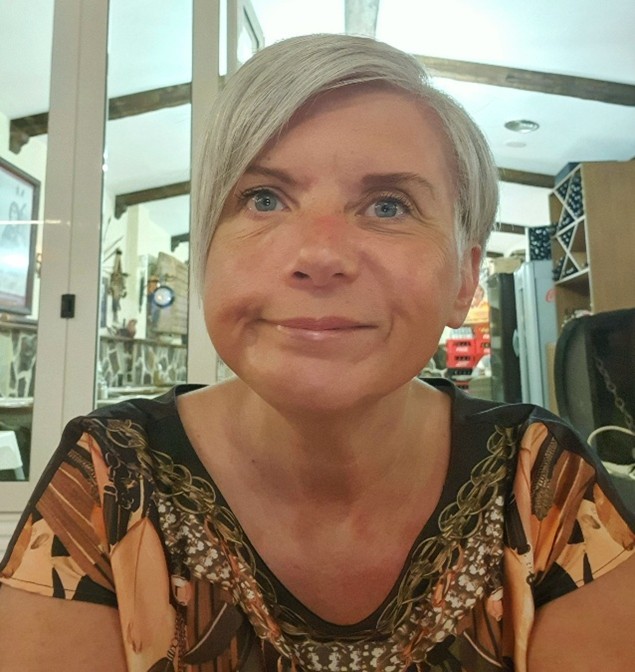
To begin, Gillian Peachey-Green, Service Administrator for the Equality, Inclusion and Wellbeing Service, has generously shared her story on how living with Microtia, Atresia and Hemifacial Microsomia (HFM) has shaped her life.
What is Microtia and HFM
Microtia is a congenital condition where the outer ear is small, underdeveloped or absent. It is often accompanied by atresia, the absence of an ear canal, and can affect one or both ears. More severe forms include anotia, where the external ear is completely missing.
Hemifacial Microsomia (HFM). the second most common craniofacial condition, after cleft lip and palate, occurs when one side of the face does not fully develop. It can affect the jaw, facial muscles, ear, eye and nerves, often resulting in hearing loss and facial asymmetry. Most cases are sporadic, with no clear cause.
Gillian’s Story
Gillian was born in 1974 with several clinical features of Microtia, atresia and HFM. Diagnosed at age six, her family began a long and uncertain journey supported by a multidisciplinary NHS team. Under the care of specialists at NHS Greater Glasgow and Clyde, including Professor Ian Jackson and later Professor KF Moos, she underwent a carefully planned series of reconstructive treatments as she grew.
Her path included mandibular distraction osteogenesis, jaw wiring, soft tissue augmentation, and attempts at auricular reconstruction before eventually receiving a prosthetic ear in her teens. Each stage was timed around her development, ensuring the best outcomes with minimal disruption.
Gillian describes her parents as fully involved, trusting the Maxillofacial Team to guide every decision. But as a child, she often felt isolated as she had no peers with the same condition to talk to and struggled with being visibly ‘different’, drawing looks and comments that affected her confidence.
As a child, a lot of her patient journey was discussed between her doctor and parents. Gillian feels that in this day in age, so that the child is heard, children should have more of a voice and be included in the discussions, to offer their opinions during their treatment journey.
As an adult, memories of surgeries and difficult procedures still surface, but she chooses to view her journey with strength and purpose. Today, she no longer wears her prosthetic ear, embracing her appearance fully. She explained: “I realised I didn’t need to look like everyone else to feel like myself.”
Becoming a parent brought new emotions, including fear that her child might face similar challenges. Early scans reassured her, but the experience deepened her empathy for others navigating uncertainty.
Gillian now hopes to establish a Microtia/HFM Peer Group within NHS Forth Valley, offering support, shared experiences and reassurance for families and patients. While she values an online HFM support group in the United States, she believes a local network would be hugely beneficial.
What This Means at Work
Gillian’s experience also shapes her day-to-day interactions. To support colleagues’ understanding, she highlights a few simple adjustments that make communication easier:
- Avoid standing on her right side, where she has no hearing.
- Background noise makes conversation difficult to process.
- If speaking, face her directly – turning away makes lip-reading and sound recognition impossible.
- If she is on the phone, avoid trying to speak to her at the same time.
- In meetings, she positions herself carefully to maximise what she can hear.
Looking Ahead
By bravely sharing her story, Gillian hopes to raise awareness, foster compassion and inspire others to share their own experiences. Her journey reflects what we aim to celebrate – strength, individuality and the richness of experience.
If you’d like help telling your story, email the Equality, Inclusion and Wellbeing Service.
Gillian would like to dedicate her story to the memory of pioneering oral and maxillofacial surgeon Professor Khursheed Francis Moos who died on 31 May 2025.